“From even the greatest of horrors irony is seldom absent.”
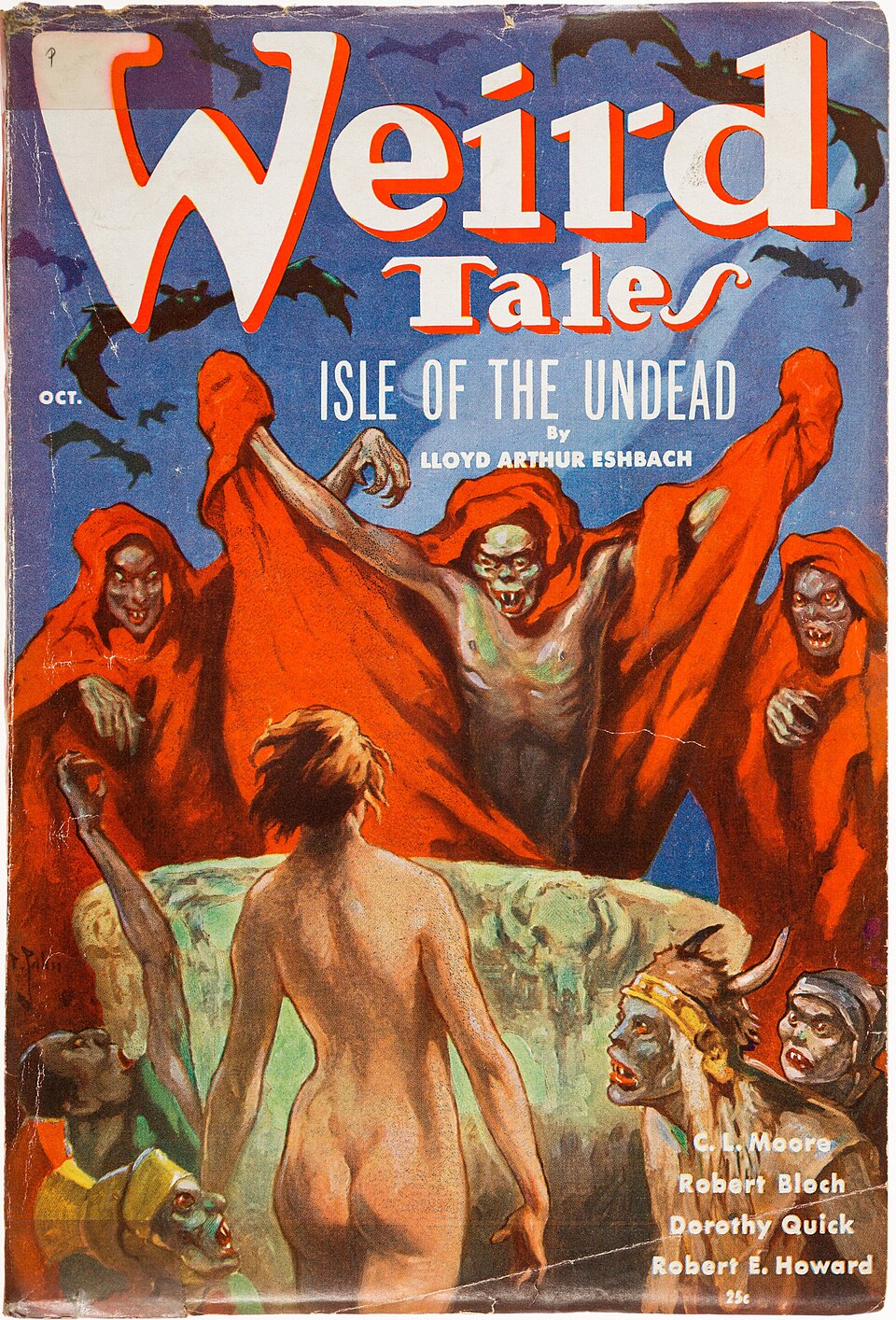
— H. P. Lovecraft, The Shunned House (written 1924; first magazine publication in Weird Tales, October 1937)
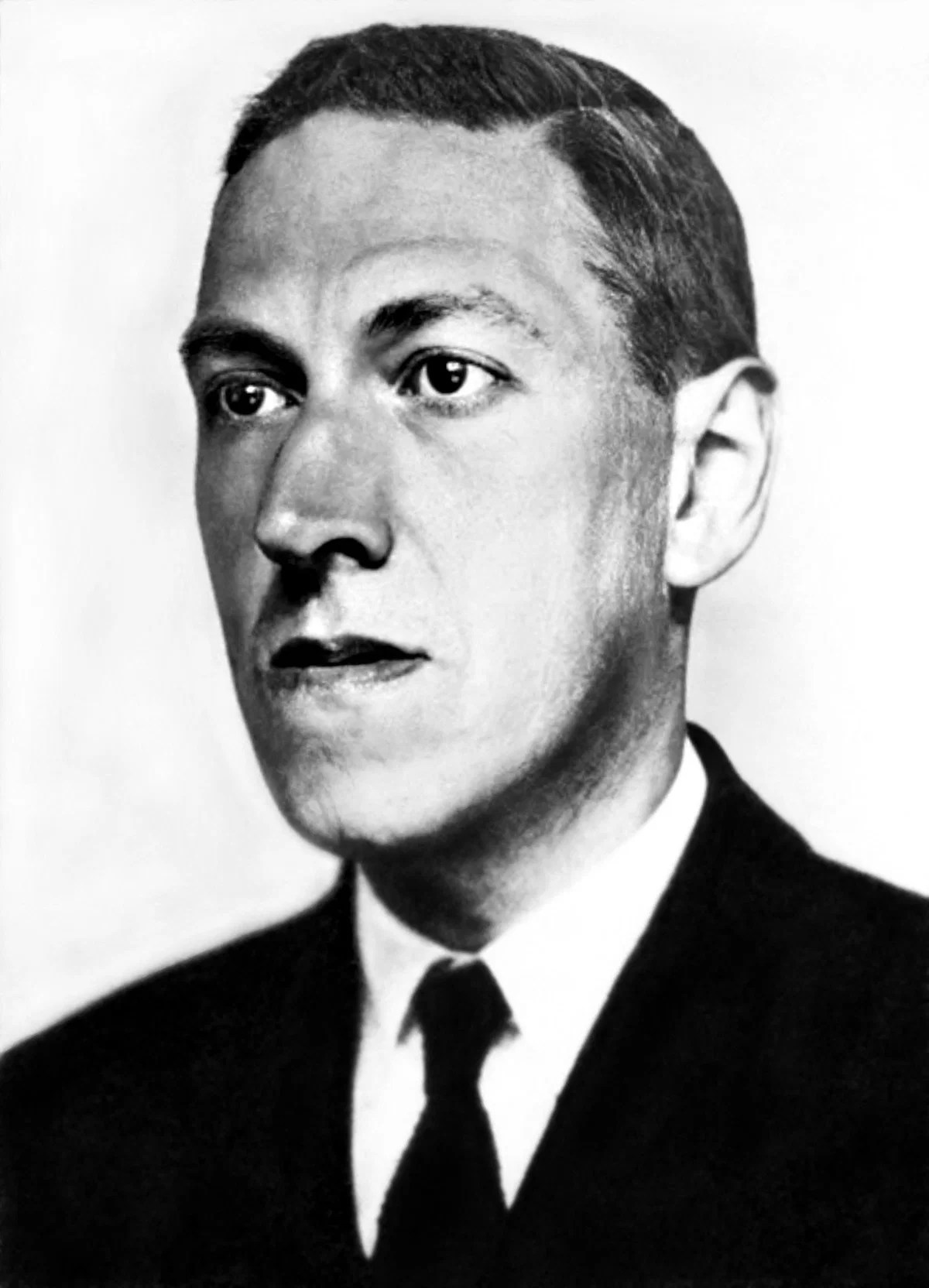
Lovecraft’s long afterlife continues to prove him right. The man who taught the twentieth century to embrace an indifferent cosmos could not imagine that his own borough would ever include people unlike himself.
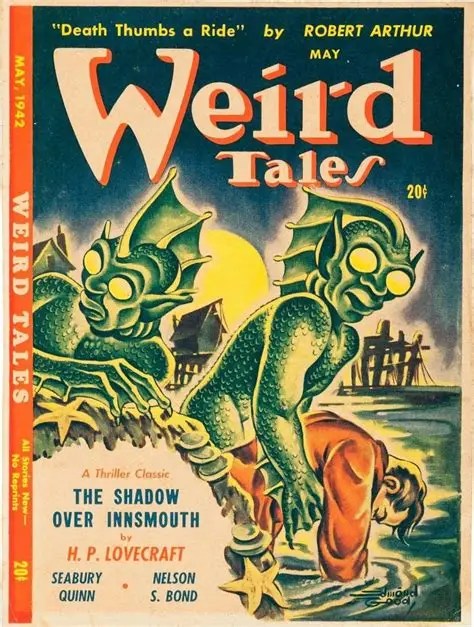
The apostle of the unknowable was terrified of the Slavs and Italians immigrating to Brooklyn. Irony is certainly not absent from a magazine that, despite failing at every single thing a business is supposed to do, continues to shape and direct popular culture.
But the most important things Weird Tales published may not have been stories. Its letters column was a prototype of the internet, running seventy years ahead of schedule. A rival delivered the other half later, and the two together eerily resemble the technology that defines the modern era.
Rich in Everything but Money
Weird Tales launched in March 1923. It paid a penny a word, sometimes less, and paid on publication rather than acceptance, which, for a magazine always behind, meant late or not at all. Its authors were destitute. Robert E. Howard, who invented Conan in its pages, shot himself at thirty. Lovecraft, its defining voice, died at forty-six of an intestinal cancer that went undiagnosed until weeks before his passing, having earned in his lifetime almost nothing from a corpus that would soon launch a swarm of lucrative franchises.
And in this condition of perpetual insolvency, the magazine invented, or at least midwifed, cosmic horror, sword-and-sorcery, and a substantial fraction of American genre fiction. Although the enterprise was an unbroken commercial disaster, its cultural yield is almost incalculable: thirty years of penury laid the foundations for blockbuster after blockbuster.
But how it did this is rarely discussed.
The Eyrie
From its inception, Weird Tales ran a letters column called The Eyrie. This was not unusual in itself; other pulps had them too. This one, however, was allowed to evolve.
The Eyrie began as a channel between editor and reader. Edwin Baird, and after him the long-reigning Farnsworth Wright, let the readers talk to each other. They printed arguments about which stories were best; uncompensated contributors demanded more of this and less of that, corrected the writers, and corrected each other.
That is the first half of the machine: a public room where strangers with a shared obsession could clash and commiserate. What the Eyrie did not do, as a practice, is what some assume it did. In its first year Baird occasionally let a street address through, Lee Torpie “of 1204 Mason Street, San Francisco” in the same issue as Dagon, but it was never a regular practice, and by the Wright years the Eyrie had settled into printing only name and city: “Gertrude Hemken, of Chicago,” “Henry Kuttner writes from Beverly Hills.” You could learn that a kindred spirit lived in Seattle. Most months you would have to track him down yourself.
The second half was built by a competitor. Hugo Gernsback launched Amazing Stories in 1926, and by early 1927 its letters column, Discussions, was printing the readers’ full addresses as a matter of policy. The effect was immediate and, in the standard histories, decisive: readers bypassed the magazine and contacted each other directly. Out of these correspondences came the first clubs, the fanzines, and “fandom.” Mike Ashley calls that column “the real secret of Gernsback’s Amazing Stories,” and for the readers “the only avenue for these fans to talk about their wild imaginings which were otherwise viewed as crackpot.” Gernsback wanted his readers to find one another; Wright gave his audience somewhere to argue.
The internet is, more or less, a combination of these philosophies. Not its wires, which came much later, but its social machinery: two pulp editors built that out of paper and postage, eight hundred miles apart, in under four years.
Lovecraft Came Through the Comments
Lovecraft’s first appearance in Weird Tales was not a story. It was the cover letter he sent with his first five, which Baird printed in the September 1923 Eyrie. It may be the least persuasive job application in history: he has “no idea that these things will be found suitable, for [he pays] no attention to the demands of commercial writing.” Dagon, his first story there, came out the next month.
The letter did not make his career; the stories in the envelope did. However, the column was where Lovecraft first introduced himself. He entered the field as a participant in a conversation, like a blogger today, as someone who could be complimented or criticized, not an unassailable name in the table of contents.
A second qualification cuts the other way: Lovecraft was already a native of the paper internet when he arrived. He had joined the United Amateur Press Association in 1914, nine years before Weird Tales was born, and the amateur press associations were mail-based social networks with membership rolls, circulated journals, and round-robin commentary: Usenet in 1895. That is where he became a man of letters, and several of his earliest correspondents came to him through amateur journalism, not the Eyrie. What the magazine did was take the habits of this cranky subculture and put them in front of a newsstand readership many times its size.
Correspondence drove his creativity. Lovecraft was a compulsive letter-writer. He is estimated to have written tens of thousands of letters over his life; the circle that formed around him (Clark Ashton Smith, Robert E. Howard, August Derleth, Fritz Leiber, a teenaged Robert Bloch) was as much a circle of collaborators as it was a literary movement.
The famous shared universe of the Cthulhu Mythos grew directly out of this back-and-forth. They were writing for each other because they were writing to each other. This was collaborative, networked, open-source worldbuilding: a wiki with postage. The Mythos was and is a shared repository; it has an originator, but in practice it works as an open commons.
The Real Fictional Book
As any nerd knows, Lovecraft invented the Necronomicon.
He references this terrible but nonexistent grimoire across his stories with such deadpan consistency that his friends began to reference it in theirs. Some readers were convinced it was real, asking where a copy might be found. Lovecraft answered them, patiently and often, that it was not. “None of us has the least wish actually to mislead readers,” he wrote in January 1934; his circle, he told another correspondent that August, would “always carefully explain to enquirers that it is 100% fiction.” The book, he’d told Robert E. Howard years earlier, “must yet be written in order to possess objective reality.”
In August 1937, five months after Lovecraft’s death, Weird Tales published Manly Wade Wellman’s The Terrible Parchment. Dedicated to the deceased, it tackled a delightfully meta premise (before being meta had become humdrum): a page of the Necronomicon turns up inside a copy of Weird Tales. Its characters, themselves diehard fans, began to wonder if the book had willed itself into existence. Then, in the December 1937 Eyrie, Wellman relayed a chilling and comical anecdote. When he took it to his agent, Julius Schwartz, who was sitting with Mort Weisinger, both men’s mouths dropped. Five days earlier they had been discussing the possibility of the Necronomicon materializing through the combined mental effort of H. P.’s many devotees.
Given how common this wish likely was among Weird Tales connoisseurs, this was probably not a bona fide synchronicity. Nevertheless, it shows how powerful even an analog forum was at altering the consciousness of its members.
This event anticipated trends the internet would not get around to for seven more decades. A fictional object, propagated across a network of consumers and contributors, is believed into a kind of reality. Eventually the internet borrowed the Tibetan term tulpa to describe modern entities like Slender Man, who was conjured on the Something Awful forums in 2009 and became “real” within months. That is the entire logic of creepypasta and r/nosleep, where the governing convention is that everything is true, and the fiction’s power comes from the collective agreement to treat it as fact.
In hindsight, it’s impressive: The Eyrie’s readers reverse-engineered the mechanics of viral collaborative myth through a penniless pulp publisher during the darkest years of the Great Depression. They just didn’t have the bandwidth to run it at scale. The idea was fully formed. Only the wire was missing.
From Lovecraft’s Lips to Your Ears
The two columns fed the fanzines directly.
The Fantasy Fan opens its first issue by thanking Farnsworth Wright for printing its address in the Eyrie, which is how Weird Tales readers found it at all, and its editor and contributors had found one another through Gernsback’s columns. The fanzines fed organized fandom and the amateur press associations, which were already established by then. Those fed the conventions, and, once the wire arrived, the Usenet horror groups, the Web forums, creepypasta, r/nosleep, and the YouTube narration channels where a soothing voice like mine reads a stranger’s first-person account of alternate realities or something that should not be in their room.
The honest qualification is that the Eyrie was not the only node, and Gernsback’s column did more of the connecting. Amateur press associations predate both, and the local science-fiction clubs were already forming. What descends from the pulps is a durable architecture: hub, visible correspondents, direct contact between strangers, fiction and commentary in the same space. This template is now taken for granted.
That last thread is streaming through millions of headphones right now: a narrator reading an anonymous, present-tense, “this really happened to me” story to an audience of solitary listeners is doing exactly what the Eyrie did: making a private dread public and inviting the audience to pass it hand to hand until the passing-along becomes enjoyable in and of itself. Technology has facilitated this to an unprecedented degree, but the layout is a hundred years old. It was hewn, like so many other wonderful things, by a bunch of weirdos.
The Unavoidable Irony
There is no honest way to write about Lovecraft’s legacy without considering what sat at the center of it all.
Lovecraft’s core fascination was the horror of provincialism on a cosmic scale: the discovery that everything the human mind believes is constant is really just a local accident, that our categories of perception are unrelentingly parochial, and that reality is stranger than anyone can know. The Call of Cthulhu opens by calling our inability to correlate all the contents of our minds the most merciful thing in the world. His entire achievement was teaching readers to feel the terror of their own powerlessness in the face of the unfathomable.
And yet the same man who could imagine the Earth as a mere mote beneath the feet of indifferent Elder Gods was undone by the sight of immigrants in Brooklyn. The Horror at Red Hook is xenophobia with its scaffolding showing; the Innsmouth stories were fueled by a miscegenation panic. The fear of the alien Other that powers his cosmic horror is, when you lower it from the stars to the street, just ordinary bigotry. He aimed the weird tale’s central insight, namely that our sense of the normal is provincial and false, at all of creation. Yet he never turned around to face the frightened man holding the pen.
It’s not as though everyone else was innocent. The Eyrie was open to whoever could afford the magazine, write in English, and see their own name and town in print beside an opinion, and at Gernsback’s shop their street address too, without fear of what might arrive in the mail. In 1920s America this was not a neutral set of conditions.
The writers Wright bought from were overwhelmingly white (in its defense, Weird Tales published more women than nearly any other pulp); the readership the magazine addressed was too; and the flimsily disguised racial panic in the fiction drew no serious objection in the column (as far as I can find). A network that lets strangers find each other lets them find each other on the terms of whoever is already inside it. The Eyrie, like America itself, was a genuine democracy of enthusiasm with limited enfranchisement.
That is the inheritance. Every platform since has repeated the pattern: a real widening of who gets to speak, laid over an old guest list. The comments section that let strangers discover the Cthulhu Mythos today lets like-minded people construct hermetic echo chambers, for good or ill. We did not receive the promise and the poison separately.
And we inherited all of it, the insight and the blindness together.
References
Primary sources
Lovecraft, H. P. Letter to the editor. “The Eyrie.” Weird Tales 2, no. 2 (September 1923).
Lovecraft, H. P. “Dagon.” Weird Tales 2, no. 3 (October 1923).
Lovecraft, H. P. “The Call of Cthulhu.” Weird Tales 11, no. 2 (February 1928).
Lovecraft, H. P. “The Shunned House.” Weird Tales 30, no. 4 (October 1937). First printed by W. Paul Cook’s Recluse Press, 1928.
Lovecraft, H. P. Letters to Robert E. Howard (14 August 1930), Margaret Sylvester (13 January 1934), and William Frederick Anger (14 August 1934), on the Necronomicon. Compiled at hplovecraft.com.
Wellman, Manly Wade. “The Terrible Parchment.” Weird Tales 30, no. 2 (August 1937).
Wellman, Manly Wade. Letter to the editor. “The Eyrie.” Weird Tales 30, no. 6 (December 1937).
The Fantasy Fan 1, no. 1 (September 1933).
Secondary sources
Ashley, Mike. The Time Machines: The Story of the Science-Fiction Pulp Magazines from the Beginning to 1950. Liverpool: Liverpool University Press, 2000.
David-Néel, Alexandra. Magic and Mystery in Tibet. 1929; English translation, 1931.
Joshi, S. T. I Am Providence: The Life and Times of H. P. Lovecraft. New York: Hippocampus Press, 2010.
Joshi, S. T., and Marc A. Michaud, eds. H. P. Lovecraft in “The Eyrie.” West Warwick, RI: Necronomicon Press, 1979.
Joshi, S. T., and David E. Schultz. An H. P. Lovecraft Encyclopedia. Westport, CT: Greenwood Press, 2001.
Moskowitz, Sam. The Immortal Storm: A History of Science Fiction Fandom. Atlanta: ASFO Press, 1954.
Weinberg, Robert. The Weird Tales Story. West Linn, OR: FAX Collector’s Editions, 1977.
“The First of Lovecraft.” Tellers of Weird Tales (blog), September 2023. https://tellersofweirdtales.blogspot.com/2023/09/the-first-of-lovecraft.html


Leave a Reply