
Some links in this post are affiliate links, including Amazon ones. As an Amazon Associate I earn from qualifying purchases, at no cost to you. Nobody paid to be mentioned, and the peppercorns were bought with my own money.
“By convention sweet, by convention bitter, by convention hot, by convention cold, by convention colour: but in reality atoms and void.”
— Democritus (5th century BCE), reported by Sextus Empiricus in Against the Logicians I.135
Jell-O and fresh pineapple don’t mix.
This is because an enzyme called bromelain shreds the scaffolding, so your would-be dessert never sets. The same enzyme, abetted by acidity and microscopic needles of calcium oxalate, may turn on you, which is why gorging on fresh pineapple leaves your mouth tender.
After Aldi delivered too many kiwis, I discovered these fruits have their own proteolytic enzyme, actinidin, which tenderizes meat more gently than bromelain or papain. Nevertheless, they are also inhospitable to Jell-O.
However, intriguing food chemistry doesn’t always create or destroy. In an intensely audiovisual culture, our neglected senses are assumed to be honest. For this reason, it’s unsettling when our other senses serve up the unexpected.
Sweet is sweet and sour is sour, and never the twain shall meet, or so we’d like to think. But like sight and audition, gustation’s locks can be picked, jammed, bribed, and rekeyed.
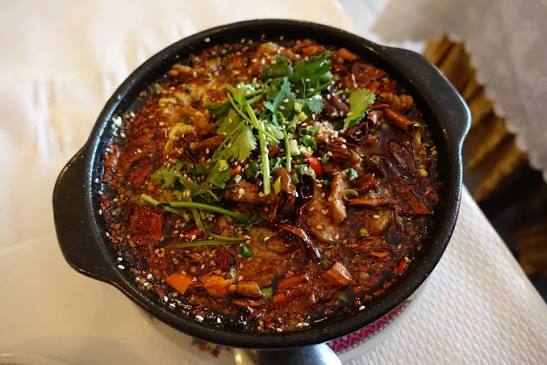
Sichuan Beef, courtesy of Guilhem Vellut.
A Peppercorn’s Touch
“Your own body is a phantom, one that your brain has temporarily constructed purely for convenience.”
— V. S. Ramachandran, Phantoms in the Brain (1998)
Bite a Szechuan peppercorn and your lips will buzz with a sensation akin to a mild electric current. If you’ve never electrocuted yourself, congratulations. Here’s your opportunity to simulate the experience.
Despite the undeniable tremor, nothing is vibrating. There is no current or chemical burn. The responsible molecule, hydroxy-alpha-sanshool, bypasses your taste buds and latches onto nerve endings that relay pressure and motion to your brain.
Researchers at University College London in 2013 pinned down the frequency by painting ground Szechuan pepper onto volunteers’ lower lips before asking them to match the phantom buzz against a mechanical probe vibrating on their fingertip. Their lips and the fingers agreed: roughly fifty flutters a second. Of course, this measurable frequency is in no way inherent to the peppercorn.
Maybe you’ve had mapo tofu, one of the most iconic dishes of China’s Sichuan province: slide a spoonful past your lips and the contrasts instantly collide: the tofu yields like warm custard, delicate and velvety, while the toasted peppercorn dust spreads tingling static across your tongue.
Or shuizhu niurou, boiled Sichuan beef, where a ladle of smoking oil hits a heap of raw garlic, dried chili, and cracked pepper with an aromatic hiss that carries the buzz down into the broth. The diner is left numbed, cleansed, and primed for the next bite.
Fusion Select’s peppercorns are excellent and reasonably priced.
Or, if you’re feeling creative, you may want to dip your toes in the versatile world of peppercorn oil.
A Berry and Its Evil Twin
“You are not expected to understand this.”
— Dennis Ritchie, Unix V6 source code (1975)
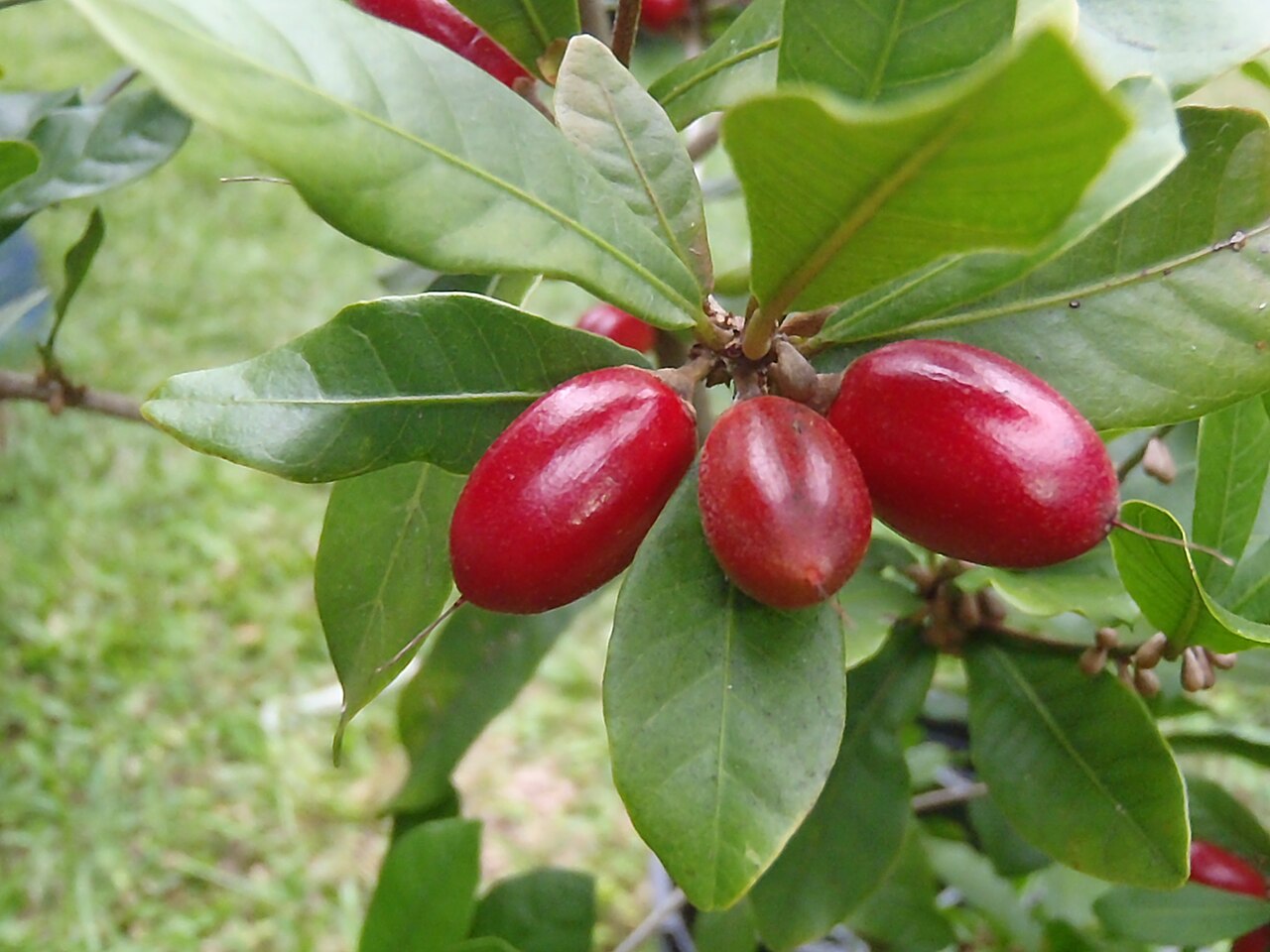
The miracle berry, Synsepalum dulcificum, is a small red West African fruit. Chew one, and for about an hour a protein called miraculin rewires your sweet receptors. Acidity now activates them. Lemons turn into lemonade, vinegar becomes apple juice, and limes are disconcertingly candied. Nothing about any of these ingredients has really changed, of course.
Long before you could order miracle berries from Amazon, West African communities had woven this botanical trick into daily life. In the coastal forests of Ghana and Nigeria, farmers and tavern-goers chew the red berries before partaking in wild-fermented staples. Under the fruit’s brief spell, the tartness of freshly tapped palm wine softens into a fruit-forward nectar. That same simple ritual turned the mouth-puckering edge of fermented maize porridges like kenkey and koko into comforting breakfast treats.
Now meet its evil twin.
Gurmar, Gymnema sylvestre, is a vine whose gymnemic acids block your sweet receptors. Chew a leaf before a spoonful of sugar and you will taste only grit. Depending on your current relationship with sweets or reality, this may be the eeriest thing you’ll do this October.
An Imprisoned Red
“Color is the place where our brain and the universe meet.”
— Paul Cézanne, as recorded by Joachim Gasquet. Frequently misattributed to Paul Klee. See Merleau-Ponty, free PDF.
Long before a morsel touches our tongues, vision acts as its advance scout.
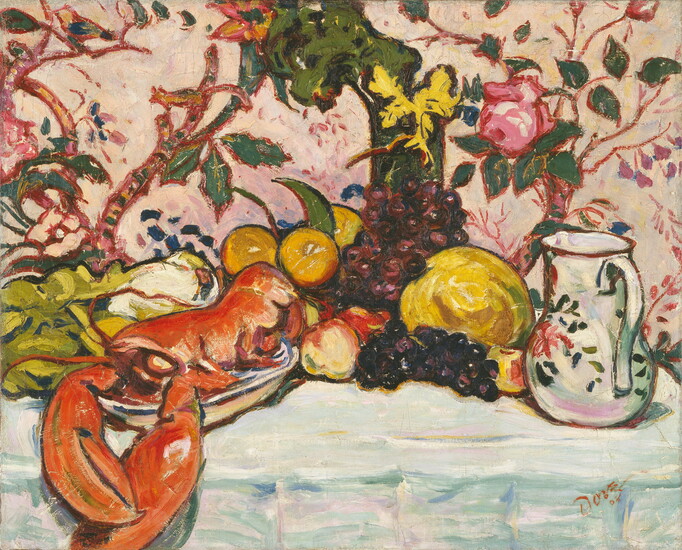
A live lobster is mottled blue-black, the unappetizing hues of wet river stones. Drop it in boiling water and it turns the brilliant scarlet we associate so closely with the animal that children draw them that way (and some adults too).
The pigment is astaxanthin, which is naturally a vivid orange-red. In the living shell it’s wrapped inside a protein called crustacyanin, and the embrace physically bends the pigment’s structure, shifting the color it reflects toward blue and grey.
However, heat denatures crustacyanin the same way it unfolds bromelain in pineapple during canning. Once the protein lets go, the astaxanthin snaps back to its unbound orange-red and the whole animal turns red. You are not watching a crustacean cook so much as watching a color escape its captor, turning what was unpalatable into something luxuriously appetizing.

Utagawa Hiroshige (1797–1858); Bonito and Saxifrage, from an untitled series of fish; c. 1832/33; Color woodblock print, ōban; 23.6 × 34.5 cm (9 5/16 × 13 5/8 in); The Art Institute of Chicago, Clarence Buckingham Collection, 1925.3804. CC0.
One Plus One is Eight
“Stock is everything in cooking, at least in French cooking. Without it, nothing can be done.”
— Auguste Escoffier, Le Guide Culinaire (1903)
Glutamate is savory.
Umami may sound insufferably pretentious to your ears (as it does to mine), but you’ve almost surely reveled in the deep meaty roundness of aged parmesan, soy sauce, or ripe tomatoes. All of them are pleasing by themselves. Now take a second class of molecules, nucleotides like inosinate (in dried bonito and cured meats) or guanylate (in dried mushrooms), and savoriness multiplies.
The two molecules lock onto the umami receptor at different points. Glutamate settles into the hinge of a clamshell-shaped binding pocket; the nucleotide sits at the rim and holds the shell shut, so the receptor fires far harder than either molecule could manage alone. It isn’t a flaw so much as a hidden feature, and chefs from around the world have independently built foundational culinary traditions on top of it.
Japanese dashi is the purest expression: kombu seaweed (glutamate) is simmered with bonito flakes (inosinate). Anchovy and parmesan in a Caesar dressing exploit the same principle, as do mushrooms in beef stew.
Mirai Dashi, with no added salt or MSG, is a fine choice.
Yamasan Dashi has no added MSG, but is salty. If you are not watching your sodium intake, it is probably the better place to start.
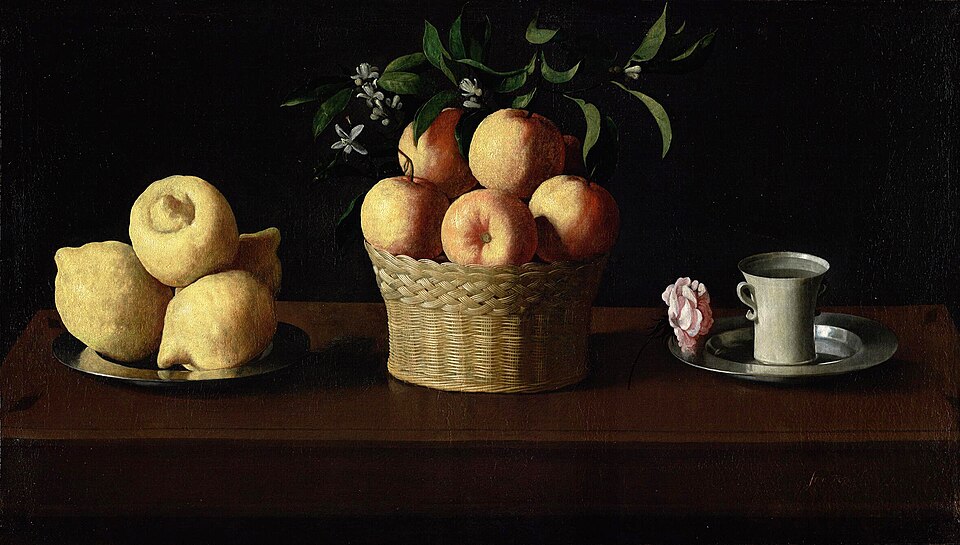
Francisco de Zurbarán (1598–1664); Still Life with Lemons, Oranges and a Rose; 1633; Oil on canvas; 62.2 × 107 cm (23.6 × 42.1 in); Norton Simon Museum, Pasadena, California.
What is “Delicious”?
“What we observe is not nature itself, but nature exposed to our method of questioning.”
— Werner Heisenberg, Physics and Philosophy (1958)
A lemon is objectively acidic, but its “sourness” isn’t as easily pinned down because it’s only present in the meeting: a receptor’s answer to a molecule’s offer. Flavor lives in that handshake, which is exactly why it can be forged by either side.
This work is already well underway, and it is no longer botanical. Miraculin has cousins—brazzein, thaumatin, monellin—that don’t rewire the sweet receptor so much as trip it directly, and until recently most of them were unusable at any real scale because their progenitor plants yield almost nothing and grow nowhere convenient. Precision fermentation has quietly solved that: engineered yeast now produce these proteins by the vat, and since 2024 the FDA has raised no objection to three separate brazzein preparations and two monellins. Brazzein is roughly a thousand times sweeter than sugar by weight, and because it is a protein, the body digests it as one.
No glycemic spike, no carbohydrate load.
This reframes what it means to eat well. For over a century the “healthy” version of a food has meant the subtracted version: less sugar, salt, fat, and pleasure, sold as virtue and endured as penance. Yet if sweetness is seen as a signal rather than a substance, the sugar was never the point. Deliver the message directly and the unwanted effects become optional.
Every receptor has this lever.
Bitterness blockers, ranging from adenosine monophosphate to yerba santa extracts and mushroom-derived molecules, already let food scientists mute the harsh edge of vegetables, plant proteins, and medicines without burying them in sugar. Umami synergy is why a mushroom-and-seaweed stock can carry a broth that would otherwise need meat. Salt-perception modulators, kokumi peptides that work through a separate calcium-sensing receptor, and flavor systems that fill in what the missing sodium would have done, aim to make low sodium meals edible.
Tomorrow’s kitchens will resemble today’s; the real differences will be undetectable to the naked eye. Food will not be engineered to contain more of anything, but to ask for it more persuasively. The best meal you eat in thirty years may be delicious solely due to interpretation.
Which, of course, has always been the case.
Sources & Further Reading
Epigraphs and primary philosophical sources
Escoffier, A. (1903). Le guide culinaire: Aide-mémoire de cuisine pratique. Émile Colin.
Gasquet, J. (1921). Cézanne. Bernheim-Jeune.
Heisenberg, W. (1958). Physics and philosophy: The revolution in modern science. Harper & Brothers.
McLellan, P. (2018, July 2). /* You are not expected to understand this */. Cadence Breakfast Bytes. https://community.cadence.com/cadence_blogs_8/b/breakfast-bytes/posts/you-are-not-expected-to-understand-this Annotation: Traces the comment in the 1975 Unix V6 kernel source (slp.c), credited to Dennis Ritchie and Ken Thompson, which accompanied the process-switching code and became a piece of computing lore.
Merleau-Ponty, M. (1964). Eye and mind (C. Dallery, Trans.). In J. M. Edie (Ed.), The primacy of perception (pp. 159–190). Northwestern University Press. (Original work published 1961) Annotation: Attributes “Color is the place where our brain and the universe meet” to Cézanne, via Gasquet, and notes that Klee liked to quote it — the source of the common misattribution to Klee.
Ramachandran, V. S., & Blakeslee, S. (1998). Phantoms in the brain: Probing the mysteries of the human mind. William Morrow.
Sextus Empiricus. (1935). Against the logicians (R. G. Bury, Trans.; Loeb Classical Library No. 291). Harvard University Press.
Pineapple, bromelain, and kiwi
Amri, E., & Mamboya, F. (2012). Papain, a plant enzyme of biological importance: A review. American Journal of Biochemistry and Biotechnology, 8(2), 99–104. https://doi.org/10.3844/ajbbsp.2012.99.104
Carne, A., & Moore, C. H. (1978). The amino acid sequence of the tryptic peptides from actinidin, a proteolytic enzyme from the fruit of Actinidia chinensis. Biochemical Journal, 173(1), 73–83. https://doi.org/10.1042/bj1730073
Maskey, B., & Karki, D. B. (2024). Efficient three phase partitioning of actinidin from kiwifruit (Actinidia deliciosa) and its characterization. Preparative Biochemistry & Biotechnology, 54(1), 95–102. https://doi.org/10.1080/10826068.2023.2209877
Maurer, H. R. (2001). Bromelain: Biochemistry, pharmacology and medical use. Cellular and Molecular Life Sciences, 58(9), 1234–1245. https://doi.org/10.1007/PL00000936
Pavan, R., Jain, S., Shraddha, & Kumar, A. (2012). Properties and therapeutic application of bromelain: A review. Biotechnology Research International, 2012, Article 976203. https://doi.org/10.1155/2012/976203
Szechuan pepper
Bautista, D. M., Sigal, Y. M., Milstein, A. D., Garrison, J. L., Zorn, J. A., Tsuruda, P. R., & Julius, D. (2008). Pungent agents from Szechuan peppers excite sensory neurons by inhibiting two-pore potassium channels. Nature Neuroscience, 11(7), 772–779. https://doi.org/10.1038/nn.2143 Annotation: Shows that hydroxy-α-sanshool excites sensory neurons by inhibiting two-pore-domain potassium channels.
Hagura, N., Barber, H., & Haggard, P. (2013). Food vibrations: Asian spice sets lips trembling. Proceedings of the Royal Society B, 280(1770), Article 20131680. https://doi.org/10.1098/rspb.2013.1680 Annotation: Ground pepper in ethanol was applied to the lower lip; participants matched the tingling against mechanical vibration on the right index finger, converging on 50 ± 2.4 Hz, the range of rapidly adapting (RA1) tactile afferents.
Lennertz, R. C., Tsunozaki, M., Bautista, D. M., & Stucky, C. L. (2010). Physiological basis of tingling paresthesia evoked by hydroxy-α-sanshool. The Journal of Neuroscience, 30(12), 4353–4361. https://doi.org/10.1523/JNEUROSCI.4666-09.2010 Annotation: Demonstrates direct excitation of rapidly adapting mechanoreceptor fibers by sanshool.
Miracle berry and gymnema
Bascom, W. R. (1951). Yoruba food. Africa, 21(1), 41–53. https://doi.org/10.2307/1156157
Koizumi, A., Tsuchiya, A., Nakajima, K., Ito, K., Terada, T., Shimizu-Ibuka, A., Briand, L., Asakura, T., Misaka, T., & Abe, K. (2011). Human sweet taste receptor mediates acid-induced sweetness of miraculin. Proceedings of the National Academy of Sciences, 108(40), 16819–16824. https://doi.org/10.1073/pnas.1016644108 Annotation: Shows that miraculin binds hT1R2–hT1R3 as an antagonist at neutral pH and an agonist at acidic pH.
Sanematsu, K., Kusakabe, Y., Shigemura, N., Hirokawa, T., Nakamura, S., Imoto, T., & Ninomiya, Y. (2014). Molecular mechanisms for sweet-suppressing effect of gymnemic acids. Journal of Biological Chemistry, 289(37), 25711–25720. https://doi.org/10.1074/jbc.M114.560409 Annotation: Shows that gymnemic acids suppress sweetness in humans (but not mice) through the transmembrane domain of hTAS1R3. Clinical evidence for metabolic effects remains preliminary.
Lobster
Cianci, M., Rizkallah, P. J., Olczak, A., Raftery, J., Chayen, N. E., Zagalsky, P. F., & Helliwell, J. R. (2002). The molecular basis of the coloration mechanism in lobster shell: β-Crustacyanin at 3.2-Å resolution. Proceedings of the National Academy of Sciences, 99(15), 9795–9800. https://doi.org/10.1073/pnas.152088999 Annotation: Astaxanthin bound within crustacyanin — held in a bowed conformation, keto groups hydrogen-bonded to the protein, the two pigments coupled — undergoes a bathochromic shift toward blue; heat denatures the protein and releases the pigment’s native orange-red. (Salmon stores astaxanthin unbound in muscle and is, as you probably know, pink even when raw.)
Umami synergy
Yamaguchi, S. (1967). The synergistic taste effect of monosodium glutamate and disodium 5′-inosinate. Journal of Food Science, 32(4), 473–478. https://doi.org/10.1111/j.1365-2621.1967.tb09715.x
Yamaguchi, S., & Ninomiya, K. (2000). Umami and food palatability. The Journal of Nutrition, 130(4), 921S–926S. https://doi.org/10.1093/jn/130.4.921S Annotation: Review of umami perception and its culinary basis.
Zhang, F., Klebansky, B., Fine, R. M., Xu, H., Pronin, A., Liu, H., Tachdjian, C., & Li, X. (2008). Molecular mechanism for the umami taste synergism. Proceedings of the National Academy of Sciences, 105(52), 20930–20934. https://doi.org/10.1073/pnas.0810174106 Annotation: Glutamate binds the hinge of the T1R1 Venus-flytrap domain; IMP binds near its opening and stabilizes the closed, active conformation.
Sweet proteins and precision fermentation
U.S. Food and Drug Administration. (2024–2026). GRAS notice inventory [Database]. Human Foods Program. https://www.fda.gov/food/gras-notice-inventory Annotation: “No questions” letters for precision-fermented sweet proteins: Oobli brazzein (GRN 1142, March 2024; supplement, August 2024); Bestzyme Mellia brazzein (April 2025); Sweegen Ultratia brazzein (June 2026); Oobli modified monellin (GRN 1183, 2024); Amai Proteins modified monellin (GRN 1269). The Oobli and Amai notices specify Komagataella phaffii as the production organism. Thaumatin, extracted from the katemfe fruit, has been sold commercially since the 1970s.
Bitter blockers and taste modulators
Ley, J. P. (2008). Masking bitter taste by molecules. Chemosensory Perception, 1(1), 58–77. https://doi.org/10.1007/s12078-008-9008-2 Annotation: Survey of bitter-masking molecules, including the yerba santa flavanone homoeriodictyol and adenosine monophosphate.
Ohsu, T., Amino, Y., Nagasaki, H., Yamanaka, T., Takeshita, S., Hatanaka, T., Maruyama, Y., Miyamura, N., & Eto, Y. (2010). Involvement of the calcium-sensing receptor in human taste perception. Journal of Biological Chemistry, 285(2), 1016–1022. https://doi.org/10.1074/jbc.M109.029165 Annotation: Identifies the calcium-sensing receptor as the target of γ-glutamyl kokumi peptides, which enhance perceived saltiness and mouthfulness without acting on the sodium channel.


Leave a Reply