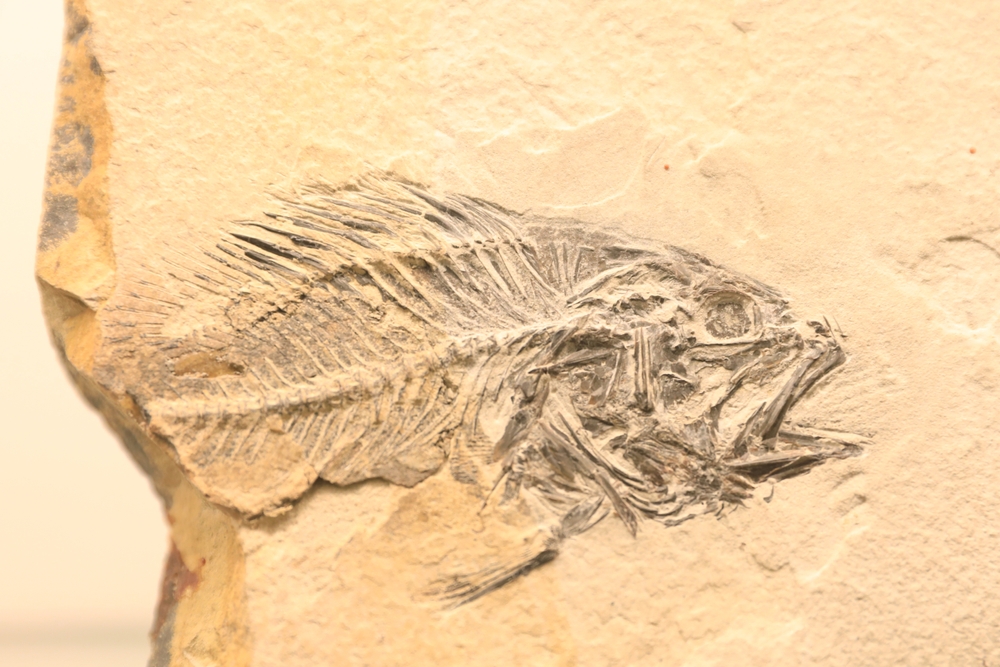
Originally published by The Neuro-Network in 2021
Are all vertebrates conscious? What about invertebrates?
What is needed for sapience and sentience? What is feeling and which animals can feel?
Satisfactorily answering these questions has implications for the way humans think of themselves and other living things.
The Ancient Origins of Consciousness, even at its most taxonomic, is consistently engaging. The material hails from far-flung fields, but this is to be expected from a subject as challenging and interdisciplinary as the scientific study of consciousness.
For David Chalmers the hard problem of consciousness boils down to objectively explaining the subjectivity of experience. He frames it as a matter of “how” and, to a lesser extent, “why.”
How does a collection of neurons give rise to an entity that feels things about its thoughts and thinks things about its feelings? Why should animals have subjective experiences at all? Feinberg and Mallatt attack the problem from three angles: philosophical, neurobiological, and neuroevolutionary. Customary for pieces about the philosophy of mind, Nagel’s What Is it Like to Be a Bat? is mentioned near the outset. Yet in this instance it is appropriate as all that follows ties in with the essay’s central question without ever deviating from a naturalistic position.
What is it like to be a bat, herring, or hermit crab?
For John Searle consciousness is a byproduct of evolution, as mundane and (ultimately) amenable to scientific investigation as “digestion, mitosis, meiosis, or enzyme secretion.” Although the authors take a thoroughly physicalistic approach, they acknowledge that, unlike other bodily functions, subjective experiences cannot (for now) be readily reduced to neural processes. This may smell of woo, but the authors do not claim, like some of their prominent contemporaries, that our understanding of the universe must be suspended or upended to accommodate their framework. They are merely recognizing that consciousness is different than circulation or salivation.
“Primary consciousness is the state of being mentally aware of things in the world—of having mental images in the present.”
– Gerald Edelman
No one believes lampreys are discussing metaphysics behind our backs or that frogs, between lily pads, brood over their mating decisions. Revunoso claims something can be said to have primary phenomenal consciousness as long as patterns—any patterns—of subjective experience are present. They do not need to be “elaborate, lingering, or humanlike.” Topography, hierarchy, and oscillatory binding are the widely agreed upon prerequisites for consciousness. The authors do not dispute this, but remind us that this does not preclude fish or amphibians. Crosstalk, what Gerald Edelman called “reentrant interactions,” occurs most notably in the thalamocortical system. However, extensive neural-neural interactions occur in many regions of the central nervous systems of both vertebrates and invertebrates
They acknowledge that in birds and mammals there was a “memory-enhanced advance in sensory consciousness”, in which the end-site of sensory integration moved from the optic tectum to the higher cerebrum. While this makes way for richer experiences, the smaller working memories of other animals by no means make them automata. Like the basic photoreceptors of our sea-dwelling ancestors that planted the seeds for our own eyes, consciousness could have begun as a primitive process that, like nearly every other part of our physiologies, steadily improved over time—rather than something that simply arose with the addition of the nth cell in a prehistoric rodent’s (more accurately, rodent-esque animal’s) neocortex.
Intelligently selecting sequences of behavior, rather than blindly executing an action based on classical conditioning or innate programming, is clearly advantageous. It is useful in any form, however basic. Whatever rudiments for decision making our ancestors had have since culminated in the capacity for self-awareness, abstract thought, problem solving, and metacognition. The aforementioned tectum is where it may have begun.
Although the optic tectum is primarily a visual processing center, sensory representation in fish and amphibians also takes place here, not the pallium. It exhibits “extreme isomorphic mapping” not only of sight but also hearing, touch, taste, lateral line, and electroreception—but not smell. The merging of inputs allows for the creation of more precise pictures of the world because different senses can compare notes with one another.
The tectum let the first vertebrates assemble “multisensory maps” of their environments and give salience to objects in their visual field. Giving salience to things in the world is requisite for successfully surviving in it. Sensory consciousness, referred to in the book as exteroceptive, is the awareness of objects in the environment.
This leads to another tantalizing conclusion: vision is our oldest sense. This runs contrary to the popular conception of smell as primitive, but early mammal’s dependence on smell was an adaption to nocturnal living, which itself was a novel way of avoiding predation in the late Triassic. Plotnick et. al date the emergence of image-forming eyes back to 520 MYA (trilobites and their ilk), 20 million years after the Cambrian. However, as there are only a smattering of scales, shells, and other fragments from between 540 and 520 MYA, this means there is no record of sensory organs of any kind during this period.
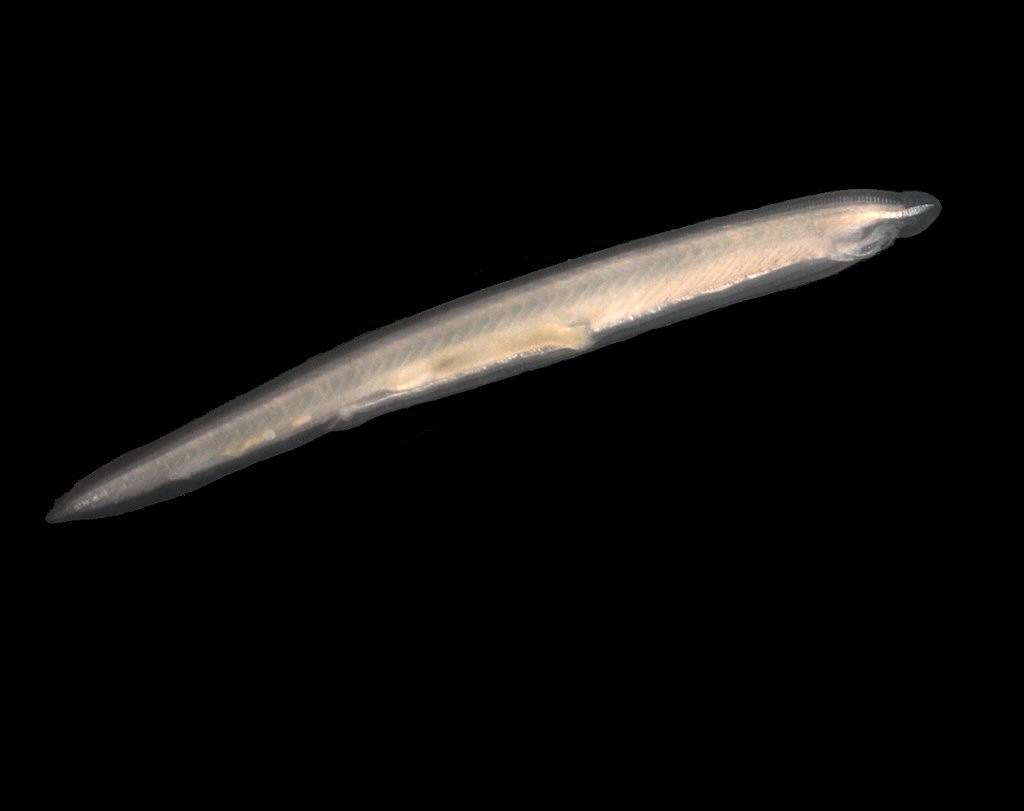
Amphioxus
The authors offer three arguments to back their position. Šestak’s (2013) computational studies concluded that genes for vision evolved earliest among chordate animals and investigations by Mallatt and Chen (2003) on Cambrian rock fossils found more evidence for vision than olfaction. Their second and third points, though overwhelming by themselves if delved into in detail, are preceded by a point that requires its own paragraph to properly unpack.
Amphioxus, “fish-like” invertebrate filter feeders studied by zoologists interested in early vertebrate evolution, provide a window into the sensory world of the pre-Cambrian. The frontal eye of amphioxus larva is homologous to our own, right down to its retinal and pigment cells. It has an “eye” but no other identifiable sense organs. If amphioxus is a good model of what came just before our own subphylum, it can be said with some certainty that vision is our oldest sense. However, as it lacks a tectum, a camera eye, and a telencephalon, the authors conclude that amphioxus is not conscious.
The second site of consciousness, they allege, was telencephalon, which became its own hub dedicated to olfaction. This less than parsimonious theory may remind some of a familiar peculiarity about smell: among the senses, it is the only one that does not pass through the thalamus on its way to the cortex. A scent can be the presence of something that was in a particular place and may return to it. The temporal dimension of smell is one reason long-forgotten aromas can bring vivid memories to mind, like the madeleine cake that sent Proust on one of his lengthy reminiscences.
Although, contrary to many mistaken recollections (including my own), Proust’s lengthy reminiscences started with the taste of a madeleine, not its smell.
Remembrances of things past aside, the conventional view, which does not bequeath the same honors upon the tectum as Feinberg and Mallatt, holds that avian and mammalian consciousness evolved independently from their respective reptilian lineages. This, at first glance, seems less likely (more messy) than sauropsids and synapsids having a common conscious ancestor. Yet they acknowledge a weak spot in their own hypothesis: because it implies that bird brains have two distinct places for visual consciousness, the tectum and the pallium, it raises the “awkward question” as to whether, and how, two detailed and distantly generated images can be united.
Feelings can be defined as the formation of qualia that are not images. As previously mentioned, in fish and amphibians the tectum is responsible for assigning salience to an object—that is, how urgent moving towards or away from it should be—among other things. Valence, attraction or repulsion to objects in the environment, has obvious survival value. Yet exteroceptive consciousness, awareness of objects in the environment, does not entail emotion. Interoceptive consciousness covers phenomena like nausea, hunger, and thirst. One of the questions the chapter raises, and one that is answered in part by the rival hypotheses within it, is whether affective or interoceptive consciousness came first.
Fear, according to LeDoux, can only arise in a self-observing entity. At this time human beings are the only animals known to do this, possibly because self-report is difficult to do without language. He is skeptical as to whether other mammals can feel fear at all, noting that highly evolutionarily conserved “global organismic states” activate automatic and unconscious defense mechanisms.
Panksepp and Solms note that the cortex likely plays only a small role in generating emotion. Instead, it primarily acts as a tuner, a structure built at a later time that serves to amplify or inhibit signals from the much older limbic system. Decorticated rats are more, not less, emotional. Hydrocephalic children display a wide range of emotions despite the nearly total lack of a cortex. That is not to say they are completely alright, only that “their behavior indicates that they experience affects.”
Derek Denton sees emotions as an extension of homeostasis, particularly in relation to thirst (his specialty is electrolyte regulation). Decorticated animals also exhibit signs of emotions, which he attributes to brain stem regions common to all vertebrates and even cephalochordates, like our friend amphioxus. However, he believes a fully developed cerebrum and neocortex are needed to support any sort of emotional life—making it a mammals-only club. This may recall the James–Lange (sometimes just Jamesian) account of emotion, in which stimuli with valence first cause physiological changes, which are in turn sent to the brain to generate affects. This favors the interoception first view.
In LeDoux’s defense, it is hard to imagine what advantages horror or terror would have for most animals. In humans it is generally maladaptive. It is not a matter as to whether gerbils or salamanders or stingrays can feel existential dread or ruminate over an event that is unlikely to happen, but whether they have affective states. Again, as it is with sapience, there are quantitative and, particularly when broaching the still more controversial and seemingly oxymoronic subjects of invertebrate sentience, qualitative components to the question.
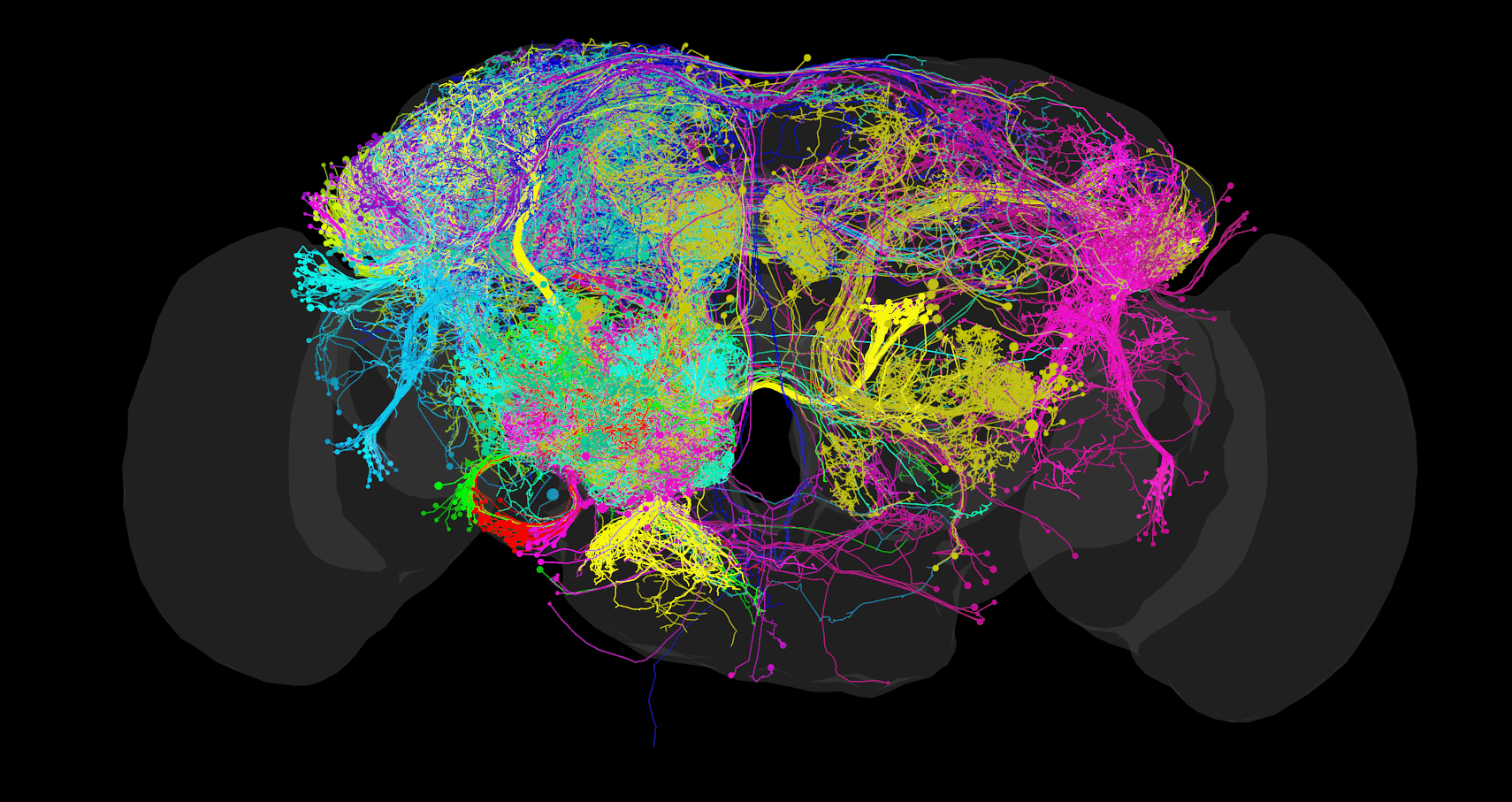
The Fruit Fly Connectome
Even when adjusted for body size arthropods have far fewer brain cells than vertebrates, however, the authors twice call the five level retinoscopy of the fruit fly visual hierarchy “impressive.” The fifth level in humans is “way up” in the cerebral cortex; visual consciousness arises just at the fourth level in fish and amphibians. This is fairly strong evidence for sensory awareness in flies. Visual retinoscopy has been documented in insects, crustaceans, myriapods, and chelicerates.
Experiments by Karine Fauria showed “the bees successfully formed a mental image of the gate pattern, put that image into memory, and then related it to the correct target pattern.”
Neurobiological naturalism bridges the “ontological gap” between mind and matter. It may be more accurate to call it the scaffolding for a bridge, but this is not a jab at them by any means. They are acutely aware that it is just a skeleton for a narrative being fleshed out. After all, extricating anything meaningful from such a dauntingly complex organ is a challenge. Although the authors do not mention it, their view has importance beyond organic brains.
An anthropocentric approach to artificial intelligence may be aligned with the ultimate goal of the endeavor, but it is limiting. By moving beyond it researchers will free themselves to ask new questions.
What is the bare minimum needed to generate sapience or sentience? How did nature build upon a simple base? What sort of increments and what kinds of leaps took place? This is not to say that AI research will precisely mirror brain evolution, but it may draw inspiration from it. Neuroscience, psychology, and their offspring have come a long way since the Behaviorists who, for most of the twentieth century, turned it into a taboo. Today the word is no longer forbidden, although it is still occasionally controversial when attributed to animals.
Neurobiological naturalism forces us to face the core of what we are and where “we,” in the most basic sense of the word, began.
References and Suggested Reading
Chittka, Lars. “Bee cognition.” Current Biology 27.19 (2017): R1049-R1053. Link
Feinberg, Todd E., and Jon M. Mallatt. The ancient origins of consciousness: How the brain created experience. MIT press, 2016.
Feinberg, Todd E., and Jon Mallatt. “Phenomenal consciousness and emergence: eliminating the explanatory gap.” Frontiers in Psychology 11 (2020): 1041. Link
Feinberg, Todd E., and Jon Mallatt. “Subjectivity “demystified”: Neurobiology, evolution, and the explanatory gap.” Frontiers in Psychology 10 (2019): 1686. Link
Feinberg, Todd E., and Jon Mallatt. “The nature of primary consciousness. A new synthesis.” Consciousness and cognition 43 (2016): 113-127. Link
Godfrey-Smith, Peter. Metazoa: Animal life and the birth of the mind. Farrar, Straus and Giroux, 2020.
Godfrey-Smith, Peter. Other minds: The octopus and the evolution of intelligent life. Vol. 325. London: William Collins, 2016.
Güntürkün, Onur, and Thomas Bugnyar. “Cognition without cortex.” Trends in cognitive sciences 20.4 (2016): 291-303. Link
Merker, Bjorn. “Consciousness without a cerebral cortex: A challenge for neuroscience and medicine.” Behavioral and brain sciences 30.1 (2007): 63-81. Link
 Adam Alonzi
Leave a comment