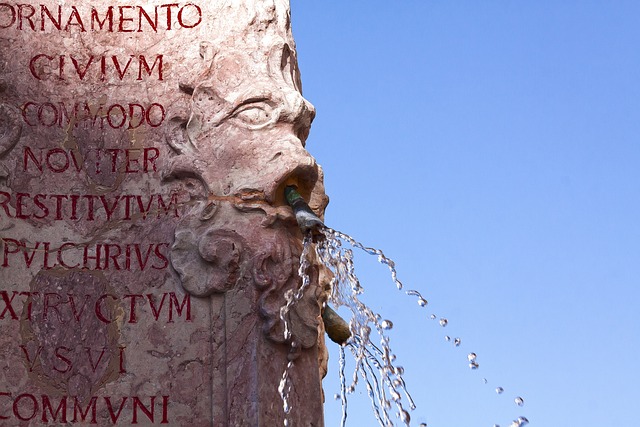
Quidquid latine dictum, altum videtur.
Whatever is said in Latin seems profound
Who would disagree?
From jurisprudence and medicine to church liturgies and moldering alchemical tomes, our most venerated (and unavoidable) institutions borrow from a language that, in its spoken form, perished over a thousand years ago.
The Princeton Review reports that students who dual major in classics have better rates of admission into medical school than those who focused solely on the sciences.
Etymological finesse alone probably can’t explain these findings.
Anyone who toys with foreign languages notices they strike us differently than our mother tongue (or tongues).
It’s experienced in a different way because it’s tethered to an entirely different set of associations.
For centuries educators have exalted Latin for fortifying grammatical understanding (though this is probably true for any foreign language), but it’s also worth mentioning that it gives a sense of flexibility.
After all, it’s hard to understand anything abstract until a point of reference is found. You need a second point.
There are still more reasons to study Latin.
Besides being the progenitor of the Romance languages, spoken today by nearly a billion people, its literature is vast and rich: from Suetonius’s salacious histories to the heroes of The Aeneid to the presciently picaresque scenes of The Golden Ass.
Latin’s succinctness is best appreciated by attempting to translate Horace; its winding sentences must be endured first hand with Cicero.
Since stoicism was an internet fad not too long ago, it may be worth mentioning, before someone purchases their first Wheelock volume, that Marcus Aurelius wrote in Greek.
His wife had a long affair with a gladiator and his son was a dangerous megalomaniac, but he won the Marcomannic Wars.
Guess it’s a wash.
Latin didn’t end with the fall of Rome; the Western canon is awash with authors who used it: philosophers like Aquinas, Descartes, Spinoza, Francis Bacon, and Swedenborg as well as scientists and mathematicians like Newton, Gauss, and Euler.
The latter three lived in academic Latin’s heyday. Euler could recite the entirety of The Aeneid from memory (Gauss and Newton were no slouches in the classics either).
Latin seems profound because it’s a vista to another time. It can lay claim to that very adjective.
Profoundis means deep. Ancient languages, alive or dead, are a way to excavate the past without shovels or digging permits. Ancient languages come from the depths of history.
They will remain with us for as long as a dwindling fraction of the population remains reasonably literate.
Qui habet aures audiendi audiat
“Those who have ears to hear, [let them] hear!”
-Matthew 11:15
This phrase famously appears in Mark and Matthew. It is also generously sprinkled throughout the gnostic Gospel of Thomas.
Jesus is not referring to ordinary audition. The Messiah is obligated to love everyone, which presumably includes the deaf.
Then again, there’s no need to relegate ourselves to scripture. Charles Darwin once said that “mathematics seems to endow one with something like a new sense.”
Any subject has the potential to give us an entirely new lens to look through.
Attentively playing a musical instrument, however amateurishly, makes us aware of the noises around us—footsteps, singing birds, wobbling tea kettles, and falling leaves.
The mindful student, musically gifted or not, begins to note the tone, timbre, and tempo of every thud, tap, and screech.
The philosopher Empedocles is now most famous for jumping into a volcano, but before this he did a few noteworthy things, like proposing a framework for perception.
For him perception was like a lock and key; no lock, no key.
Today, this is obvious.
Some things are hard to grasp; it’s even harder to explain an idea than to have one. It’s impossible to do so when the other person doesn’t have the right scaffolding in place.
Now, of course, the details of his theory were wrong.
However, his basic premise is hard to deny: without the apparatus (an ear or eye), there is no lock – meaning there is no place for a key.
Some of the most ferocious debates in the history of science have arisen from one party simply failing to see what another could because, to borrow Kuhn’s overused word (since taken hostage by the MBAs), their minds were confined by an outdated paradigm.
They had no ears with which to hear.
Quod nocet, saepe docet
What hurts us, instructs us
This is remarkably similar to a quote attributed to Benjamin Franklin.
Painful experiences linger.
While there may be some freaks among us who remember good times more clearly than bad, they are the exception.
Psychology confirms this – at least as conclusively as a soft science can confirm something.
Apparently even the happiness gleaned from winning an Olympic gold medal rapidly dissipates.
Then again, people tend to extrapolate too much from this factoid. It’s more a warning against putting too much energy into a single goal.
The question then becomes, does hurt really teach us?
Or does it make us dumber?
Functional fixedness can be as bland as not realizing that a door jamb can be used as a bottle opener, for example.
In this case, it may be a good thing.
A repetition compulsion is its more exciting cousin; it can be extremely pathological and is much more likely to make its bearer seem like the main character of a Greek tragedy…
Or a complete idiot.
It’s emotional rather than cognitive, which means it’s harder to unlearn.
It’s generally unconscious, though most people (we should hope) eventually see their patterns.
We all know the person who is drawn to the domineering, needy, or downright deranged.
We are drawn to certain personalities – which is only problematic if they’re disordered.
Freud is credited with first elucidating upon this concept, but the honor should go to Kierkegaard (and, surely, if we scoured the literature, other bright people probably figured it out millennia before dear Søren).
By his own admission Franklin was quick to anger in his youth, but over time became the level-headed diplomat Americans would one day deify.
I remember a historian from my childhood, enraptured with his own word salad, proclaim that Franklin may have “had no unconscious.”
I suppose he meant that he could directly access all contents of his mind, which is almost certainly untrue.
Indignor quandoque bonus dormitat Homerus
I become irate when the great Homer nods.
These are the words of one poet about another.
Horace recognizes that even masters make missteps and that, somewhat ironically, it is all the more infuriating when an extraordinary talent blunders.
A lackluster paperback writer can maintain their expected level of mediocrity without backlash.
In more narrow and defined domains, like sports and games, it is easier to have a flawless streak. Your performance only needs to be better than your opponents to be counted as a “win.”
If you’re not a hack, you have to constantly outdo yourself. You set the bar as high as it can go, tie the rope, and tighten it around your own throat.
Qui non proficit, deficit.
He who does not go forward, loses ground
An old proverb claims parsley has to go to the devil and back nine times before it will sprout.
Surely if a second-rate garden herb can do it (it’s good, but it’s not basil or cilantro), you can too.
This proverb is, at least in spirit, elaborated upon by Marden in An Iron Will (narrated by Adam Alonzi):
“He who is silent is forgotten; he who does not advance falls back; he who stops is overwhelmed, distanced, crushed…to live is to achieve, to will without ceasing.”
Aside from finishing, getting started is the hardest part of any time-intensive task.
Even harder is consistency. Working on it, even for a few minutes a day, will, in Anthony’s Trollope’s words, surpass the efforts of a “spasmodic Hercules.”
There are men who want to compare every endeavor to war; they want to elevate whatever mundane task they are stuck with to a struggle historians will eagerly record.
Total war, or at least what must be done to sustain it, has more in common with accounting than a bare knuckle brawl.
Fabius wore down Hannibal by playing small ball. Instead of rushing into battle against a tactically superior enemy, he practiced a strategy of patience, wearing down Hannibal’s forces indirectly, and avoiding pitched battles.
This is because he was wise enough to recognize the brilliance of his opponent. Hannibal is still recognized as a military genius, but tactical brilliance can be eclipsed by strategic foresight.
John Mosby, an infamous guerilla fighter in the American Civil War (who later became the American ambassador to Taiwan), learned to be aggressive:
“…his maxim henceforth would be to never stand still and receive a charge… [he learned] not to make contact with the enemy when his horses were jaded.”
He learned to take the initiative, but not to be foolhardy. This, from a tactical standpoint, worked in his favor. From a strategic one, taking the offensive did not work
When should you do it?
James Longstreet was pilloried for supporting Reconstruction and, as one would expect, became a scapegoat for the Lost Cause.
Longstreet was not a “defensive” commander; he just understood that warfare had changed since Napoleon.
Adopted by the U.S. army in 1858, rifled muskets not only rendered tight formations obsolete, they put victory on the side of the defender—something most commanders on both sides initially failed to recognize.
Yet between the Austerlitz and First Manassas, soldiers didn’t get any faster. Battles like Fredericksburg (and, more unambiguously, the climactic bulwarks of Petersburg) presaged trench warfare.
As strange as it may sound, the advantages of earthenworks were not obvious to most. Longstreet’s recognition of this change led Harold Knudsen to call him a “modern military thinker.”
After all, there is no blindspot more insurmountable than one that can’t be seen.
It mirrors the shift in chess from the courageous attacks of the 1800s to more the tedious “positional play” spawned by Steinitz.
Ironically, this style’s roots lie with Paul Morphy, the epitome of Romantic chess-a strange man who died in a bathtub full of women’s shoes.
Henry Kissinger has used chess and Go to compare Eastern and Western approaches to diplomacy: “chess produces single-mindedness; Weiqi [Go, or in Korean, Baduk] generates strategic flexibility.”
While he may be overplaying his hand, as academics wanting to make a point are prone to do, there is some truth here.
According to Kissinger chess is the inspiration for Clausewitz’s “center of gravity.” The “decisive point” is critical to Western theories of war, perhaps partially due to chess.
Go, on the other hand, teaches strategic encirclement. It is less direct, not as fast (in case you thought chess was too fast paced), and, lacking different pieces, more meditative…
Especially if you’re a Westerner with a tendency to project Zen experiences onto all things East Asian.
Qualis rex, talis grex
The people are like the king
A divine ruler, as explored exhaustively by James Frazer, is nearly universal.
This may be necessary, as kings have all the faults of ordinary men.
After all, an otherwise ordinary person may find it easiest to justify his authority by claiming descent from Odin, Aeneus, a bald eagle, or Santa Claus.
Fortunately for the power-hungry, and unfortunately for the rest of us, power is its own justification.
Someone is to be obeyed because they are the king; it doesn’t matter what they had to do, if anything, to gain the title.
We may want to believe this kind of thinking is a relic of feudalism, but it’s still with us: a person with money, even if it is entirely inherited, is immediately put on a pedestal.
What they say is given more gravity, and anyone who objects is dismissed as “jealous.”
A person who manages to hoard resources or attain a position of influence is assumed to be competent. The real source of their wealth, which may range from the unethical to the criminal, becomes irrelevant.
Because power is its own justification.
Contra Deuteronomy, maybe children should be, if not punished, at least shunned for the sins of their fathers. Some bloodlines are irredeemably rotten.
DNA evidence recently proved that Warren G. Harding had an illegitimate child.
But who cares now?
Harding, a Republican who led one of the most corrupt administrations in American history, is now remembered for nothing. In fact, because he had a normal name and no distinguishing (or distinguished) facial hair, he is now a nonentity.
He isn’t even blamed for the Great Depression, like Coolidge and Hoover.
Corruption is not a single party phenomenon: Democrat Grover Cleveland is known now for two things:
- Having a name since made vastly more famous by a Sesame Street puppet.
- Serving two non-consecutive terms (the only president to do so).
As well as these bits of trivia, he was also, in his personal life, a genuinely horrible man. Cleveland forced himself upon a woman named Maria Halpin.
Halpin was later admitted to an asylum under “murky” circumstances and the child was put up for adoption.
There is some truth to this proverb, but how people see themselves in relation to their rulers is more important.
Bill Clinton’s dalliances, not his accomplishments or failures, defined his eight year presidency.
He was a politician; he did what powerful people have been doing since the beginning of time. We’re not talking about a profession that has ever been lauded for their impeccable scruples.
And, not surprisingly, some of his sharpest critics were later found to be doing the same thing, like Newt Gingrich. Others, like Dennis Hastert, were found to be doing far worse.
Why did it matter so much?
The 1990s, in the United States, were the culmination of four decades of unprecedented prosperity. This is not to say there were no bumps: stagflation in the 70s, the loss of manufacturing jobs in the 80s, etc., but on the overall things had never been better in the history of the world.
Economic security comes with a massive drawback: the plebs get bored. When that happens, their shortcomings, lack of perspective, and insatiable appetites become everyone’s problem.
Much of our behavior is imitation. Without the divine demarcation, the unbridgeable chasm between us and those who lord over us, we may imitate them and feel no remorse for doing so.
Time and place seem to be irrelevant; avarice actualized will always lead to excess, and vice versa.
Democratization of rights may lead to the spread of vices. This is doubly true for the spread of information. Moral maturity comes when the actions of others are not construed as permission to do evil.
Needless to say, we have a long way to go.
To make up cheap shots earlier: fanfare for Marcus Aurelius, who refused to be corrupted by the endless temptations around them, is warranted. This alone makes him one of history’s great men.
 Adam Alonzi
Leave a comment